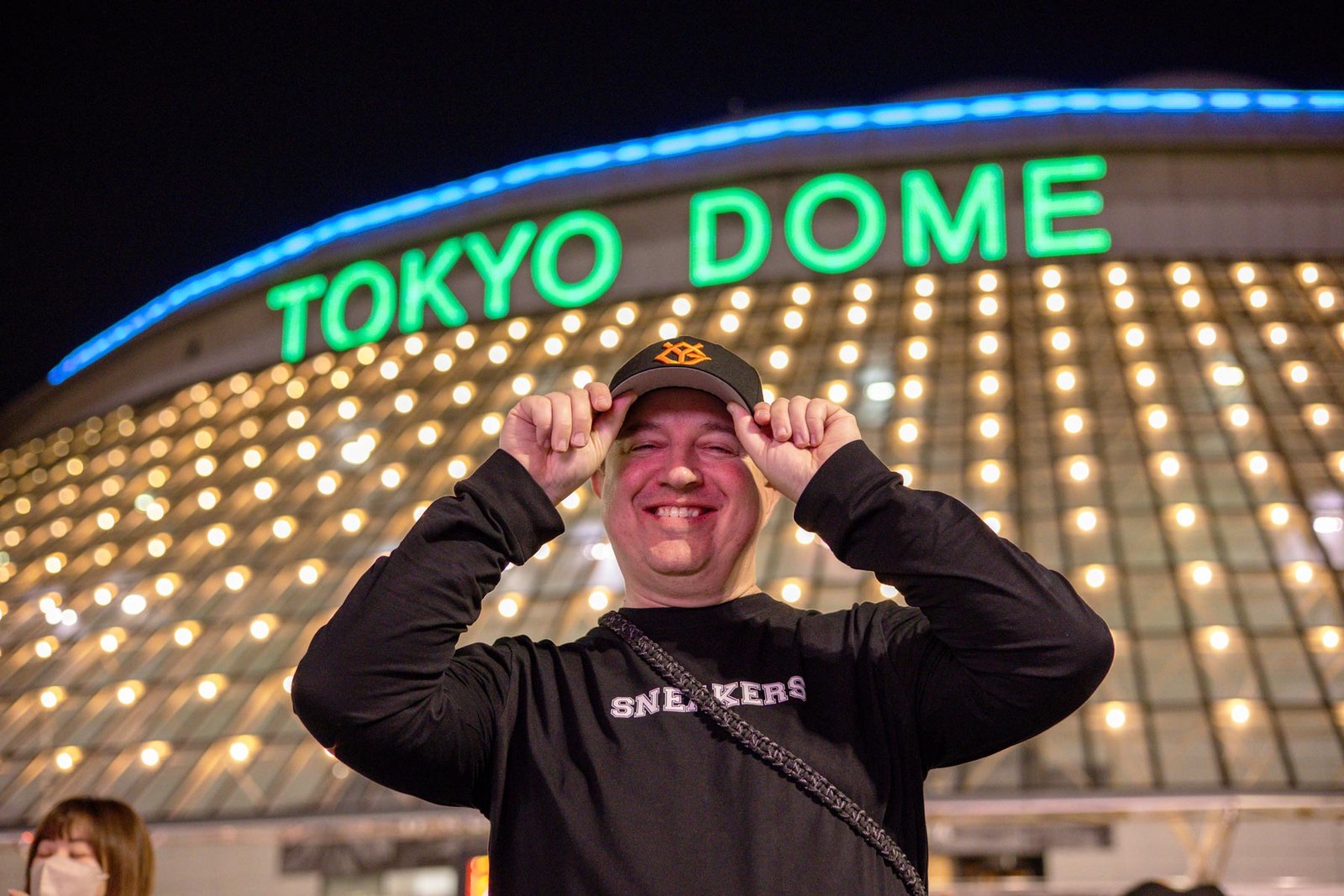
I’m Nick Engvall.
I’ve had some version of a website since 1998. Geocities first, then whatever came next, then the next thing after that. The platforms changed. The impulse never did. There’s something about putting your thoughts out into the world and seeing what comes back that I have never been able to shake.
For a long time that impulse became a career. Now it’s become something bigger than that. But we’ll get there.
The obsessions came first.
My brother and I used to draw sneakers in the 1980s. We’d sketch pairs we couldn’t afford, dreaming about the day we’d actually own them. That obsession never left. It just found new expressions over the decades, eventually turning into a career, a podcast approaching 600,000 downloads, a newsletter with a paid subscriber base, and a book. More on all of that below.
The cars started just as early. I was twelve years old when I fell in love with a car that didn’t run. It was a 1981 Honda Prelude, silver with a burgundy interior, sitting in someone’s driveway with a “For Sale – $150” sign in the window. My birthday was coming up. I convinced my stepdad to help me buy it. The seller told us it didn’t run. I told him that was fine.
It was not fine. That Prelude sat in our garage for nearly two years and never moved under its own power once. But it taught me something I’ve carried ever since: loving a car and understanding a car are two completely different things. Every build, every project, every piece-of-something I’ve owned since traces back to that burgundy interior and those black spaghetti vacuum lines I never did figure out.
The career.
It started in Sacramento, in car stereo shops. Then AT&T, selling phones. Not glamorous, but it taught me how to talk to people, how to figure out what they actually wanted versus what they said they wanted. Those skills never stopped being useful.
Before any of it became a job, it was just obsession with nowhere to go. I applied to test products for Nike. Unpaid. I just wanted to be close to the thing I cared about. They said yes. That was the first time I understood that showing up, even when there’s nothing in it for you yet, is usually how the door opens.
The first paid writing job came at Nice Kicks. I was writing about sneakers because I couldn’t stop thinking about them, and someone decided that was worth something. That realization changed the trajectory of everything.
Sole Collector came next, when the sneaker internet was still figuring out what it was. Forum culture, scanned photos from magazines, debates that went on for pages because nobody had anywhere better to be. That era shaped how I think about community, about audience, about the difference between people who love something and people who just consume it. Eastbay was a client, and I led that project as Special Projects Manager. When my time at Sole Collector ended, Eastbay brought me on directly as a contractor. Teenage Nick, the kid sketching sneakers he couldn’t afford, was living his dream.
Then Complex, where I helped build the first dedicated sneaker vertical at a time when building a “sneaker team” at a media company was still an argument you had to win in a conference room. We built something real there. The readership, the authority, the voice that made Complex Sneakers a destination. I was living in Brooklyn and working in Manhattan. Another line scratched off the bucket list.
Finish Line was next. My team and I launched user-generated content and community seeding programs before either of those things had a real playbook in traditional retail. The idea was simple: the people who actually wore the shoes were better brand ambassadors than any campaign we could produce. That turned out to be true.
StockX came next. I was employee number nine. That number still means something to me, not because of what it became, but because of what it was when I joined. A bet. A whiteboard. A small team that genuinely believed it was building something that had never existed. The authentication model, the bid/ask structure, the whole idea that sneakers deserved a financial market built around them. I was there for that conversation, and I’m proud of what that team built. We partnered with Nike to launch the very first LeBron James retros. I still can’t believe that as I type it.
Stadium Goods was the last stop. Senior Director of Brand at a company that had built a serious reputation in a short amount of time, navigating what growth and acquisition look like when your identity is on the line. I learned a lot there about brand integrity under pressure. Then I got laid off. It turned out to be the best thing that could have happened. The first book drops in October.
Woven through all of it: contract work for Foot Locker, Eastbay, Guess, Everytable, StockX, Stadium Goods, Keen, Sotheby’s, and a lot more. Some of the most interesting projects of my career happened in the gaps between the titles.
In 2025 I went independent. Now I build my own things.
What got covered along the way.
At some point the sneaker expertise started showing up in unexpected places. NPR called wanting to talk about the Nike Cortez. CNN wanted context on the resale market. The New York Times and the Guardian quoted me on where sneaker culture was heading. Business Insider, Complex, others. I talked about shoes on the radio while sitting in my car, which felt completely normal at the time and only later struck me as something worth noting.
The Sneaker History podcast came out of the same instinct that started this website: if you love something, talk about it. Nearly 600,000 downloads later, the audience for that conversation turned out to be larger than I ever expected.
The cars, continued.
The Prelude was the first teacher. The Acura Integra that followed was the spoiler. I found a 1991 Integra LS-Special in high school, factory two-tone interior, rare OEM body kit, the kind of car you baby and polish and swear you’ll never sell. Then I sold it. I’ve owned many Integras since, which is either loyalty or a pathology, and I’ve stopped trying to figure out which.
There have been others. A CRX we bought to build into a track car and ran out of money for. A Civic hatchback that sat waiting for an engine that never arrived. An uncle’s Toyota pickup that shouldn’t have started every time someone needed it, but did. Each one a different lesson in resilience, expectation, and the strange comfort of having a project that needs you.
The cars led to Exhaust Notes, an F1 podcast I’ve been hosting for years. They led to Pursuit of Something, which started as a newsletter and YouTube channel about the chaos of car ownership and the people who refuse to give up on it. They led to Cars and Kicks with Jacques Slade and Erik Valdez, which is exactly what it sounds like and more fun than anything that well-described should be.
And now they’re leading somewhere new. But that story is still being written.
Where this goes from here.
I’ve had some version of a blog since 1998, and the throughline is embarrassingly consistent: I find things interesting and I want to write about them. The blog is going back to what it was before it became a strategy. Granular, personal, no editorial calendar. The drives, the kicks, the builds, the business, the life in between. If it’s worth writing down, it ends up here.
No matter who you are or where you’re from, your experience is unique and your story is worth telling. I’ve believed that for as long as I’ve been doing this. I still do.